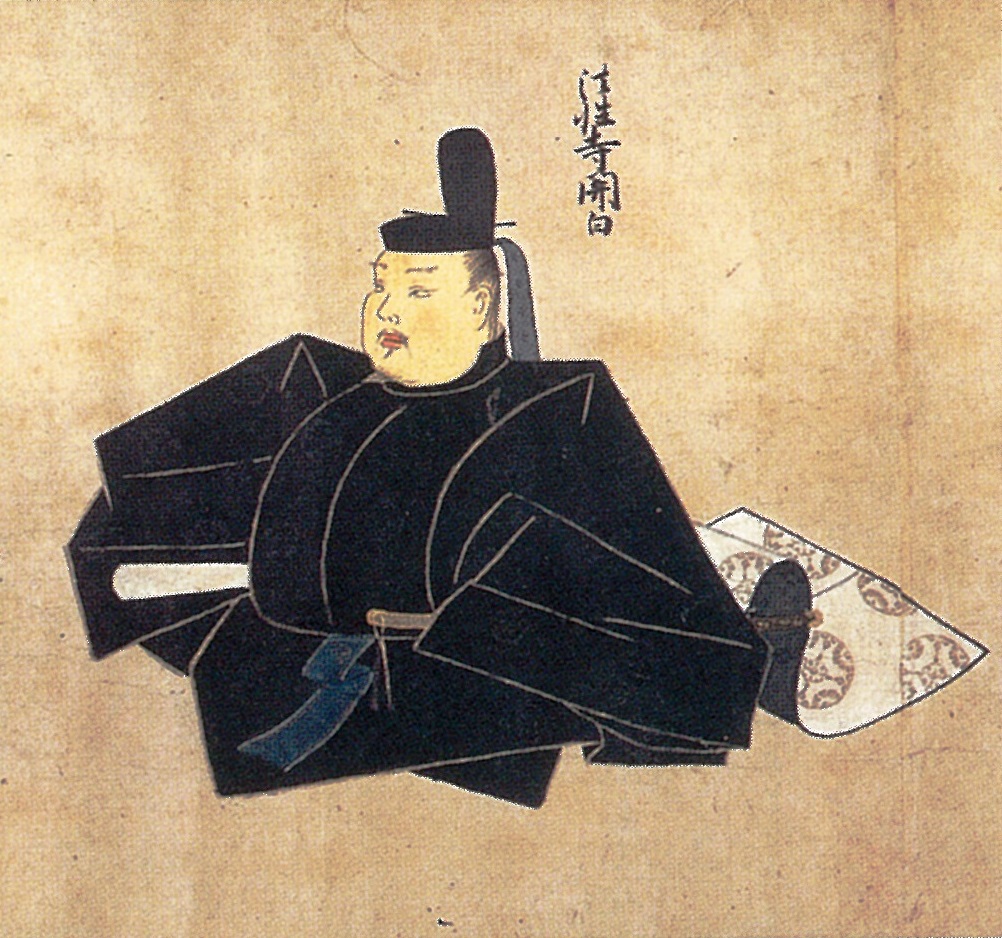
Fujiwara no Yoshifusa (藤原 良房) was also known as Somedono no Daijin and Shirakawa-dono. He was a member of the Fujiwara Clan (from its Hokke branch) who lived from 804 to 872 CE. He was the son of Fujiwara no Fuyutsugu, the grandfather of Emperor Seiwa, the brother of Fujiwara no Junshi12 and the father of Fujiwara no Akirakeiko.1 During his lifetime he adopted his brother’s son, Fujiwara no Mototsune.2
Table of Contents
Marriages
He married the daughter of Emperor Saga in 814 CE, and together they had his daughter Akirakeiko, whom he married to his nephew Emperor Montoku, the son of his sister Junshi.1 The marriage of Junshi to Emperor Montoku was arranged by him.2
He lived through the Jōwa Conspiracy of 842 CE.
Regent
That marriage led to the birth of Yoshifusa’s grandson, Emperor Seiwa (850 CE), after which he made himself sesshō, as Seiwa was a minor.1 The appointment came in 866 CE, after the Ōtemmon Conspiracy,2 and it began the tradition of having a sesshō for emperors who were minors.1 Yoshifusa was the first person from outside the imperial house to hold this title, establishing the post for his family and a regency government dominated by the Fujiwara Clan for 300 years.2
In 857 CE he was given the title of dajō daijin,1 and so managed the affairs of government for the young emperor.2
His marriage alliances established the clan’s dominance over central government.2
See also
Footnotes
1. Frédéric, L. (trans. K. Roth) 2002. Japan Encyclopedia. Belknap Press of Harvard University Press.
2. Kodansha. (1993) ”Japan: An Illustrated Encyclopedia”. Tokyo: Kodansha Ltd.

Read next
 PeopleFujiwara no MorozaneFujiwara no Morozane, son of Yorimichi, was kampaku, sesshō and dajō daijin under Go-Reizei, Shirakawa and Horikawa and wrote the Kyōgoku kampaku-ki.PeopleFujiwara no KanemichiFujiwara no Kanemichi, son of Morosuke, beat his brother Kaneie to become sesshō in 972 CE and kampaku and dajō daijin in 974 CE.
 PeopleFujiwara no TadamichiFujiwara no Tadamichi, son of Tadazane, was kampaku, sesshō and dajō daijin, a poet in Japanese and Chinese; his poem is No. 76 of the Hyakunin Isshu.