Hear about Fujiwara no Tadahira on Episode 20 of our Podcast, the Japan Archives. |  |  |
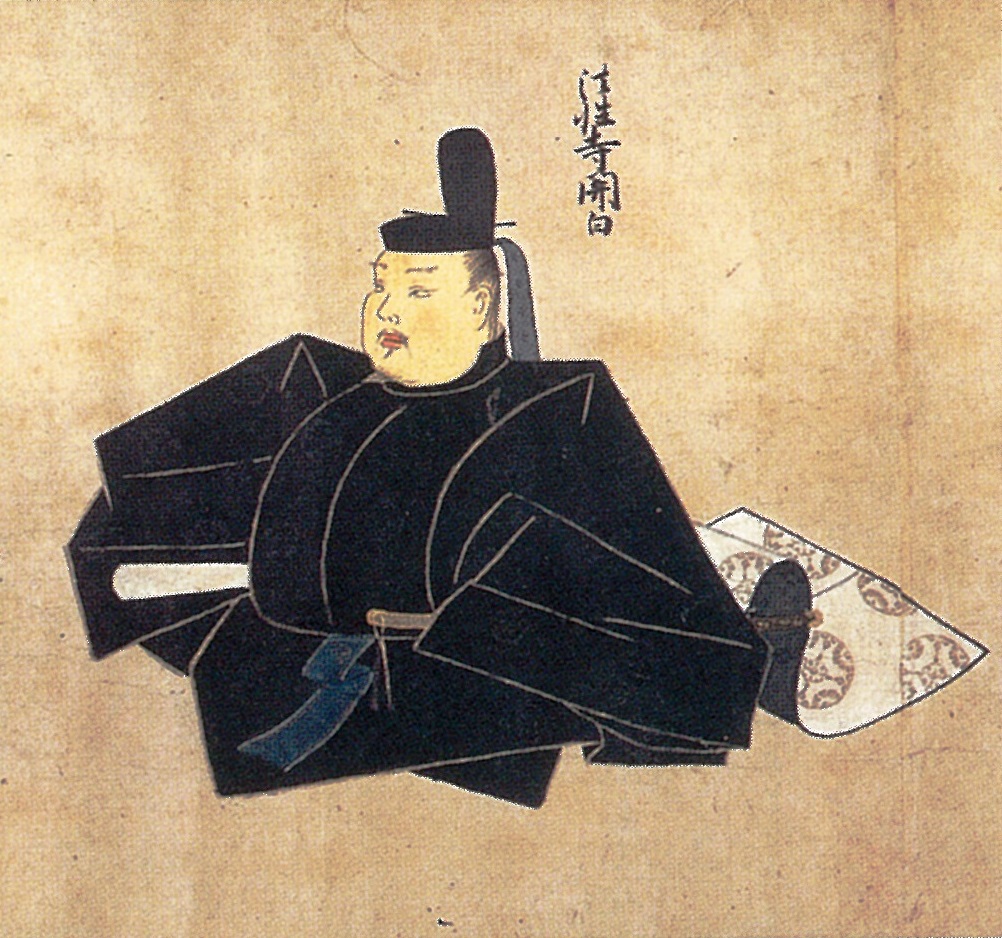
Fujiwara no Tadahira (藤原 忠平) was a member of the Fujiwara Clan, from its Hokke branch.
He was the great-grandfather of the poet Fujiwara no Sanekata1 and the son of Fujiwara no Mototsune.34 He lived from 880 to 949 CE, and after his death was known as Teishinkō (Lord Upright and Faithful);1 he was also known as Ko-ichijō daijō-daijin.3 He took over from his brother, Tokihira, as head of the Hokke branch of the Fujiwara Clan, and also held the post of Chancellor of the Realm.
Table of Contents
Career
During his life he held the post of sadaijin (Minister of the Left) in the reign of Emperor Daigo, and he became sesshō (regent) in the reign of Emperor Suzaku1 in 931 CE, dajō daijin in 936 CE and kampaku in 941 CE. On Emperor Daigo’s orders he helped compile the Engi shiki, which he worked on until 927 CE.3
Poetry
His legacy includes seven poems in the Gosenshū and another six in the imperial waka anthologies. He is also noted for leaving a journal, the Teishinkō-ki.
One of his poems is in the Ogura Hyakunin Isshu; it is the 26th in the sequence and reads:1
| Japanese text2 | Romanised Japanese1 | English translation1 |
|---|---|---|
| 小倉山 峰のもみぢ葉 心あらば 今ひとたびの みゆき待たなむ | Ogurayama mine no momijiba kokoro araba ima hitotabi no miyuki matanan | Dear mapels of Mount Ogura, if you have a heart, please wait for another visit so that His Majesty may enjoy your lovely autumn colors. |
See also
Footnotes
1. MacMillan, P. (2018) ”One Hundred Poets, One Poem Each: A Treasury of Classical Japanese Verse”. St. Ives: Penguin Classics.
2. Suzuki, H. et al. (1997) ”Genshoku: Ogura Hyakunin Isshu”. Tokyo: Bun’eidō.
3. Frédéric, L. (trans. K. Roth) 2002. Japan Encyclopedia. Belknap Press of Harvard University Press.
4. Brinkley, F. (1915) A History of the Japanese People from the Earliest Times to the End of the Meiji Era. New York: The Encyclopaedia Britannica Company.

Read next
 PeopleFujiwara no TadamichiFujiwara no Tadamichi, son of Tadazane, was kampaku, sesshō and dajō daijin, a poet in Japanese and Chinese; his poem is No. 76 of the Hyakunin Isshu.
 PeopleFujiwara no KoretadaFujiwara no Koretada, son of Morosuke, became udaijin, sesshō and dajō daijin, oversaw the Gosenshū and has poem No. 45 in the Hyakunin Isshu.
 PeopleFujiwara no MorozaneFujiwara no Morozane, son of Yorimichi, was kampaku, sesshō and dajō daijin under Go-Reizei, Shirakawa and Horikawa and wrote the Kyōgoku kampaku-ki.